Rent vs Buy Calculator

Rent vs Buy Calculator

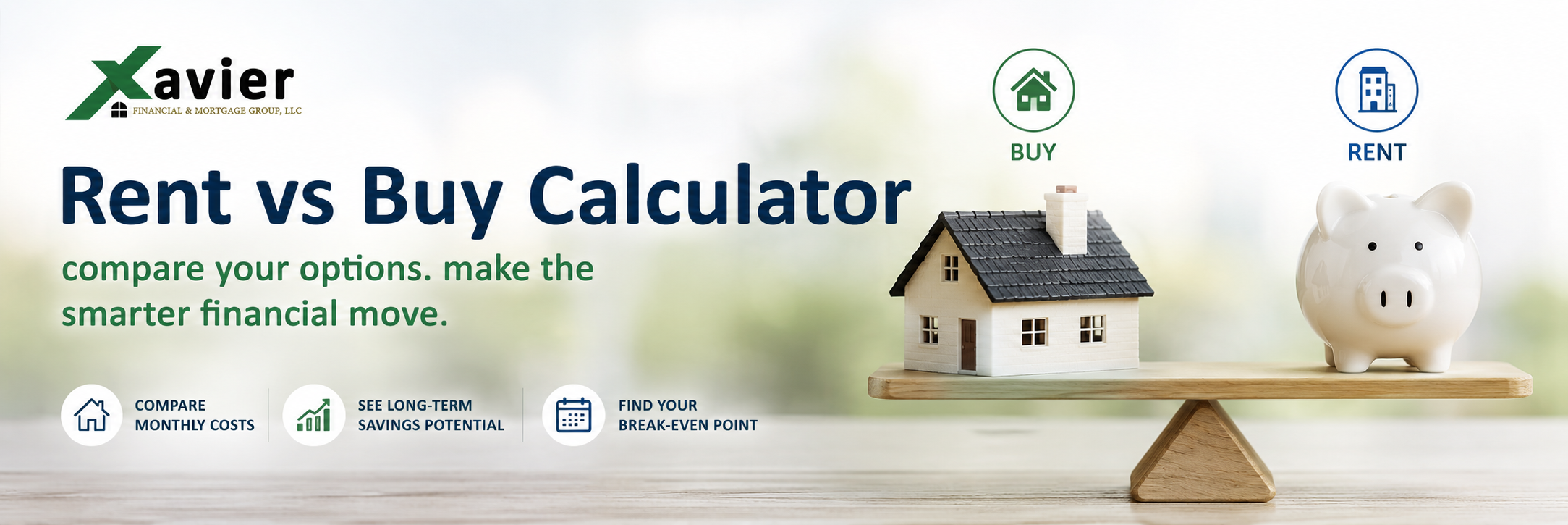
Compare renting versus buying using estimated mortgage payments, ownership costs, rent increases, home appreciation, and break-even timing.

Basic Information

Enter your current monthly rent before utilities. This is the starting point for comparing the cost of continuing to rent.

This is the comparison timeframe. Rent vs buy decisions are heavily affected by how long you expect to live in the home.

Estimate how much rent may increase each year if you continue renting. Enter 0 if you do not want to assume rent increases.

Home Purchase Information

Enter the approximate purchase price of the home. This is used to estimate loan amount, payment, appreciation, and ownership costs.

Enter the amount you expect to put down. A larger down payment may reduce the loan amount and mortgage insurance.

County may affect loan limits and certain pricing assumptions used by the calculator.

Enter the estimated yearly property taxes. If unsure, use the current tax amount shown on the property listing or county property appraiser website.

Enter the estimated yearly homeowners insurance premium. Actual insurance costs vary by property, coverage, location, and underwriting.

Enter estimated monthly homeowners association dues. If the property does not have HOA dues, enter 0.

Loan & Credit Information

Choose whether to compare all available programs or only one mortgage term.

Eligible veterans and active-duty borrowers may qualify for VA loan options.

Credit range may affect loan eligibility, pricing adjustments, mortgage insurance, and estimated rates.

Estimate how much the home's value may increase each year.

Estimate annual upkeep, repairs, appliances, landscaping, and other maintenance costs.

Estimated future cost to sell the home, such as commissions, title charges, and other seller costs.

Estimated return if down payment funds were invested instead of used to purchase the home.

Estimated buyer closing costs, including lender fees, title fees, prepaid items, and escrow setup.

This calculator, including its design, functionality, and underlying algorithms, is proprietary to Xavier Financial and Mortgage Group, LLC. Any unauthorized reproduction, modification, reverse engineering, or redistribution is strictly prohibited.

Understanding The Calculator Inputs

This calculator compares estimated renting costs with estimated homeownership costs over the timeframe you select. The result depends heavily on rent increases, ownership costs, loan type, appreciation, and how long you expect to stay in the home.

Current Monthly Rent

Your current monthly rent before utilities. This is used as the baseline cost of continuing to rent.

Estimated Home Purchase Price

The approximate price of the home you may buy. This affects loan amount, payment, appreciation, taxes, insurance, and maintenance estimates.

Down Payment

The amount you expect to contribute upfront toward the purchase. This affects loan amount, mortgage insurance, and opportunity cost.

Years You Expect To Stay

The number of years used for the rent vs buy comparison. Buying often becomes more favorable the longer you stay.

Advanced Assumptions

These include appreciation, maintenance, selling costs, closing costs, and investment return. They are prefilled but can be adjusted to test different scenarios.

Frequently Asked Questions

How does this rent vs buy calculator work?

It compares the estimated cost of renting with the estimated net cost of buying over the number of years you plan to stay. It uses mortgage pricing, ownership costs, rent growth, appreciation, selling costs, and estimated investment return assumptions.

What is the break-even year?

The break-even year is the estimated point where the net cost of buying becomes equal to or lower than the net cost of renting, based on the assumptions entered.

Does this tell me whether I should buy a home?

No. This calculator provides an educational estimate only. Your personal decision should also consider lifestyle, cash reserves, job stability, taxes, maintenance risk, and how long you expect to stay in the home.